

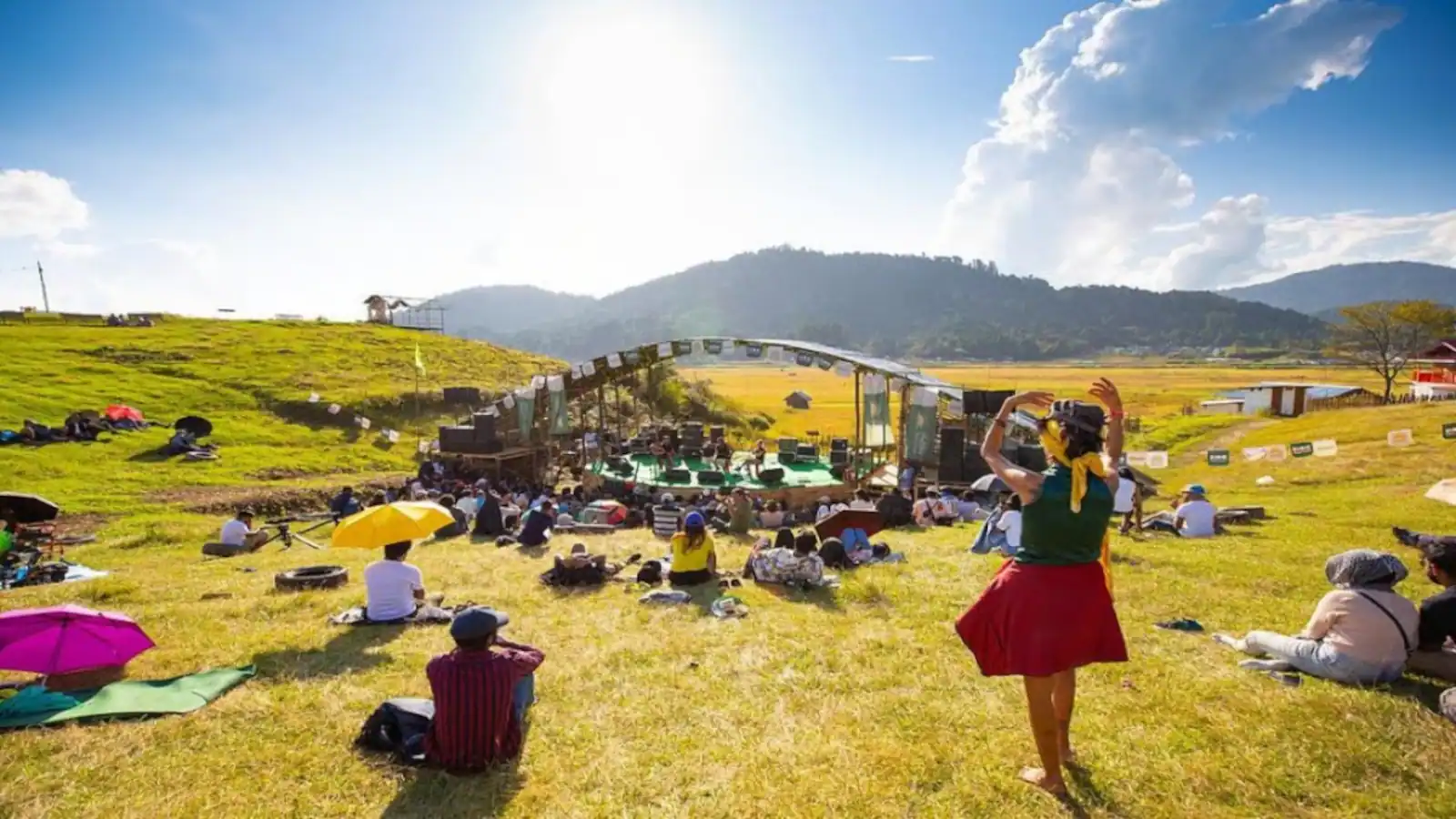
The Ziro Festival of Music brought more than 40 Indian and international artists to Arunachal Pradesh’s scenic Ziro Valley from September 24 to 27, 2026. The four-day event marked the 13th edition of the festival and brought together performers from the Northeast, other parts of India and several countries.
The festival continued its focus on independent music and cultural exchange rather than a traditional headliner-driven format. Moreover, the programme combined contemporary performances with local Apatani traditions, community activities and artist collaborations.
International participants came from countries including Sri Lanka, Algeria, Palestine, Nepal, Thailand, the Philippines, South Korea, Ireland, Switzerland and South Africa.
Guwahati Flyover Project Reaches Major Milestone in Traffic Decongestion
Ziro Festival of Music Features 41 Acts
The Ziro Festival of Music featured 41 acts during its 13th edition, according to The Arunachal Times. Organisers maintained the festival’s established approach of giving space to artists from Northeast India, the rest of the country and international performers.
The Indian lineup included established and independent names such as Sukhbir, Sneha Khanwalkar, Midival Punditz, Shakthisree Gopalan, Shanka Tribe and Parikrama. Their participation brought different musical styles to the four-day programme.
Several artists also represented the Northeast. Tripura busker Sukesh Suklabadya, Manipur’s Chingleipak Collective and Yelhomie, Sikkim’s Tribal Rain, Nagaland’s Temsu Clover, Mizoram’s Mood Station, Assam’s Novo and Arunachal Pradesh’s David Angu featured in the programme.
Additionally, performers from other parts of India expanded the lineup. Bihari rapper Shikriwal, Kaali Duniya, producer Karan Kanchan and Swara Oza were among the participating artists.
Classical music also formed part of the programme through musicians such as Sarwar Hussain and violinist Apoorv Krishna. Therefore, the festival presented a broad mix of genres rather than limiting its programme to one musical style.
International Artists Expand Cross-Cultural Lineup
The Ziro Festival of Music also brought a significant international presence to Arunachal Pradesh. The international lineup included Sri Lankan singer Yohani, Algerian guitarist Fati Teniri and Palestinian-French electronic producer Isam Elias.
Nepal’s Phosphenes, Thailand’s GYMV, the Philippines’ Talahib and South Korean act Moher also joined the programme. Meanwhile, Irish folk band Saltaire participated through a cultural residency involving workshops and collaborations with local musicians.
The festival also hosted the final chapter of the Circuit Mixers international artist exchange. The programme featured Zequenx from India, Naledi Chai from South Africa, and Lua Jungck and Owelle from Switzerland. The exchange received support from the Swiss Arts Council Pro Helvetia.
Furthermore, the partnership with Saltaire marked the festival’s first collaboration with Ireland. The initiative combined live performances with cultural interaction and knowledge sharing.
Such collaborations gave the event a wider international character while retaining its focus on independent artists. Consequently, audiences in Ziro experienced music from several regions and cultural backgrounds within a single four-day programme.
The organisers said discovery and cross-cultural exchange remained central to the festival. Rather than relying entirely on major commercial names, the programme encouraged audiences to discover emerging and independent performers.
New Cosmos Space Adds Interactive Element
The Ziro Festival of Music introduced a new space called Cosmos during the 2026 edition. The informal setting was designed to bring artists and listeners closer together through spontaneous jams, conversations and unscripted performances.
The new format added an interactive element to the festival. Instead of restricting performers to scheduled stage appearances, Cosmos created opportunities for informal exchanges between musicians and audiences.
Meanwhile, the festival continued its emphasis on the culture of the Apatani community. The programme included the traditional Daminda harvest dance and a presentation by the Apatani Women’s Association Ziro.
Traditional craft activities also formed part of the programme. Workshops covered paddy flute, known locally as Elu, and Apatani pottery. These activities connected the contemporary music programme with the cultural traditions of the host community.
The festival therefore extended beyond concerts. Cultural workshops, community-led activities and knowledge-sharing sessions created additional opportunities for visitors to engage with local traditions.
Moreover, the combination of music and community participation reflected the event’s longstanding identity. The festival has developed as a platform where independent musicians, local communities and international performers can interact.
The 2026 programme also reinforced the role of Ziro Valley as a destination for cultural events. Its setting among the hills and paddy fields provided a distinctive backdrop for the four-day programme.
Ziro Valley Hosts Major Cultural Gathering
The Ziro Festival of Music took place in Ziro Valley in Lower Subansiri district from September 24 to 27. The 13th edition continued an event tradition that has brought independent music audiences to Arunachal Pradesh.
The festival’s location remains an important part of its identity. Ziro’s landscape and Apatani cultural heritage provide a setting that differs from large urban music events.
Additionally, the programme included community-led experiences alongside performances. Visitors could engage with local cultural activities while attending concerts featuring artists from India and abroad.
The international participation also strengthened the festival’s role as a cultural exchange platform. Musicians from Asia, Europe and Africa appeared alongside performers from the Northeast and other parts of India.
However, the event maintained a clear emphasis on discovery. Organisers have described the festival as a space where audiences can encounter artists and sounds they may not already know.
The 2026 edition also involved support from cultural institutions and local authorities. The Swiss Arts Council Pro Helvetia supported the Circuit Mixers exchange, while Culture Ireland and the Embassy of Ireland in New Delhi supported Saltaire’s participation.
The Lower Subansiri district administration and Arunachal Pradesh Tourism Department also featured among the festival’s partners. Therefore, the event brought together private organisers, cultural institutions and government bodies.
Its 13th edition ultimately strengthened Ziro’s position within India’s independent music festival landscape. The combination of international performers, Indian artists and Apatani cultural activities gave the programme a distinct regional identity.
Conclusion
The Ziro Festival of Music brought 41 acts to Arunachal Pradesh’s Ziro Valley from September 24 to 27, 2026. The lineup included artists from India, the Northeast and several countries across Asia, Europe and Africa.
The festival also introduced the Cosmos space, hosted international artist exchanges and presented Apatani cultural traditions through performances and workshops. Consequently, the four-day gathering combined music with cultural exchange and community participation.
With its 13th edition, Ziro continued to provide a platform for independent artists while highlighting Arunachal Pradesh’s cultural landscape. The international collaborations also expanded the festival’s reach beyond India.
FAQs
What is the Ziro Festival of Music?
The Ziro Festival of Music is a four-day independent music and cultural festival held in Ziro Valley, Arunachal Pradesh. It brings together artists from Northeast India, other parts of India and overseas.
How many artists performed at the 2026 festival?
The 2026 edition featured 41 acts, with performers from India and several international destinations.
When was the 2026 Ziro Festival held?
The 13th edition took place from September 24 to 27, 2026, in Ziro Valley, Arunachal Pradesh.
Which international artists participated?
The international lineup included Yohani, Fati Teniri, Isam Elias, Phosphenes, GYMV, Talahib, Moher and Irish folk band Saltaire.
What cultural activities were included?
The programme featured the Daminda harvest dance, Apatani cultural presentations, paddy flute-making and playing workshops, pottery activities and other community-led experiences.