

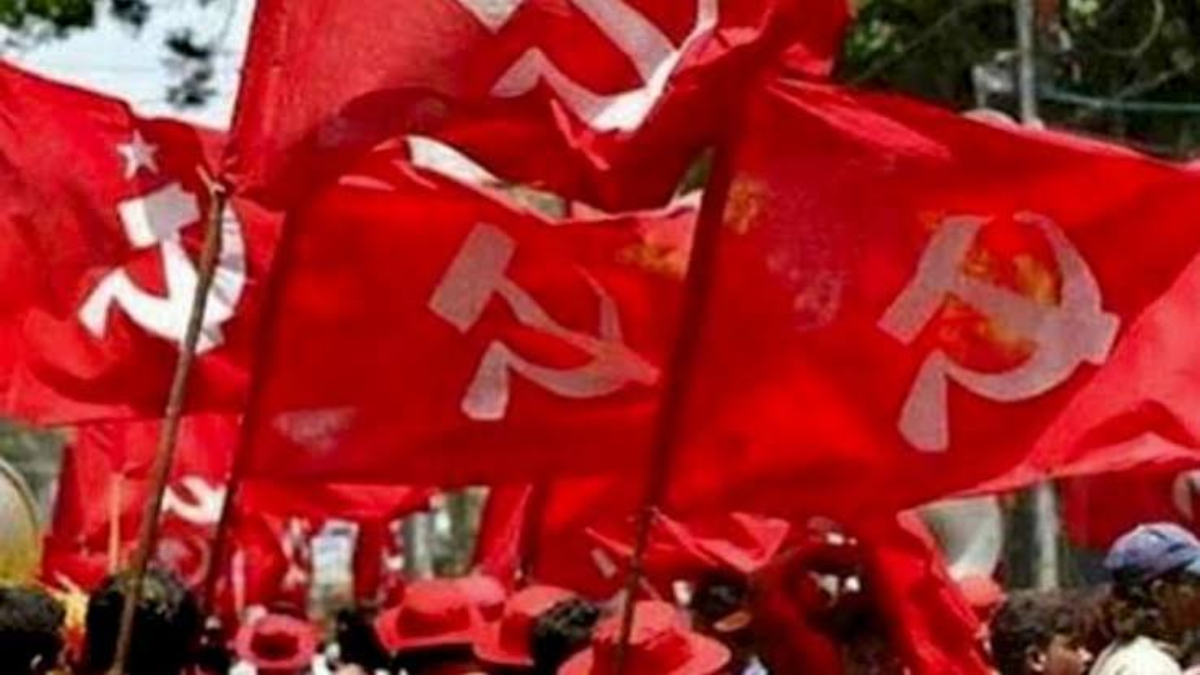
Ration rice quota changes in Tripura have triggered a political dispute after the CPI(M) state secretariat opposed an alleged reduction in rice distributed through ration shops and demanded that the decision be withdrawn immediately. The Opposition party has described the move as “inhuman” and argued that it could increase the financial pressure on families already dealing with higher prices of essential commodities.
CPI(M) challenges ration rice quota decision
In a statement issued on Sunday, August 23, the Tripura CPI(M) alleged that the BJP-led state government had reduced the entitlement of ration rice at a time when household expenses were rising. The party said the change would particularly affect larger families that depend on the public distribution system (PDS) to meet part of their food requirements.
According to the CPI(M), beneficiaries had been receiving rice at the rate of 5 kg per person. The revised arrangement, however, places a maximum ceiling of 20 kg per ration card, effectively limiting the entitlement to four members even when a household has more eligible members.
The party has demanded an immediate rollback and restoration of the earlier entitlement. It also called for stronger measures to control the prices of essential commodities.
What the revised ration rice quota means
The change concerns “Tide-Over” rice supplied to Above Poverty Line (APL) ration cardholders. A memorandum issued by the Directorate of Food, Civil Supplies and Consumer Affairs on July 20 revised the entitlement to 5 kg per person per month, subject to a maximum of 20 kg per ration card. The revised system became applicable from the August 2026 allocation month.
For families with up to four members, the change does not reduce the monthly quantity because they remain eligible for up to 20 kg. The impact is more significant for households with five or more members.
For example, a five-member family would receive 20 kg instead of 25 kg under a simple 5-kg-per-person calculation. A six-member family would also be restricted to 20 kg. This means the effective per-person share falls as household size increases.
The revised ration rice quota has therefore become a concern for larger APL households, which argue that the fixed ceiling does not reflect their actual family size.
Rising prices add to household pressure
The CPI(M) has linked its opposition to the quota change with the broader rise in food prices. The party claimed that rice prices had increased by around Rs 1,000 to Rs 1,500 per quintal over the past three months.
It also alleged that masur dal and sugar prices had risen by more than Rs 1,000 per quintal. Mustard oil, according to the party, had become costlier by approximately Rs 25 to Rs 30 per litre, while prices of spices had also increased.
These claims come amid continuing concerns over household food costs. Recent CPI(M) representatives also raised the issue of rising prices and PDS supplies during a deputation to the Food and Civil Supplies Department in Agartala on August 21. The party demanded action against black marketing and hoarding and called for regular supplies of essential commodities through ration shops.
CPI(M) seeks wider PDS measures
The party has argued that ration rice is only one part of the food requirement of most households. However, it remains important for economically vulnerable families because it helps reduce their dependence on the open market.
The CPI(M) has called for the earlier ration rice quota to be restored while also seeking measures to bring down the prices of rice, pulses, edible oil, sugar and other essential goods. It has urged the government to strengthen monitoring of markets and take action against alleged hoarding and black marketing.
The issue also comes against the backdrop of Tripura’s extensive PDS network. The National Food Security Act portal lists more than 6 lakh ration cards in the state, including AAY and priority household categories, highlighting the scale of the food distribution system.
Demand for rollback grows
The CPI(M) has urged people to mobilise and build sustained pressure on the government to reconsider the decision. The party says restoring the earlier ration rice quota is necessary to protect households from additional financial strain.
The state government’s revised arrangement remains at the centre of the dispute, with the CPI(M) pressing for its withdrawal and wider steps to address food inflation. For larger families, the debate is not simply about the quantity distributed through ration shops but also about how changes in entitlement affect monthly household budgets.
As the political opposition intensifies, the government’s response to the CPI(M)’s demand is likely to determine the next phase of the controversy over rice distribution in Tripura.
NorthEast United FC Seal Powerful 4-1 Durand Cup Win Over Karbi Anglong