

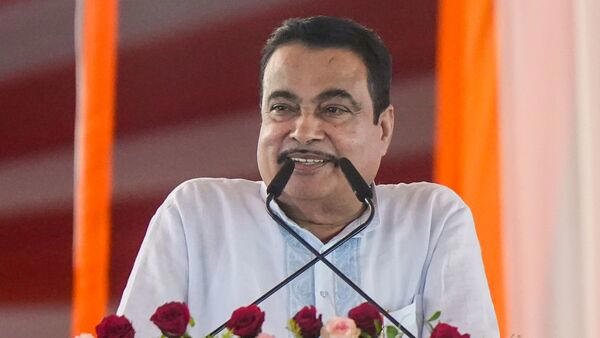
Union Road Transport and Highways Minister Nitin Gadkari has unveiled a bold vision for the future of urban mobility, saying that a “flying bus” could become India’s next major public transport innovation. Speaking at a public event, Gadkari said the government is working on futuristic transport solutions that could transform the way people travel in congested cities.
The minister’s remarks have sparked widespread interest, with many viewing the proposal as part of India’s broader push towards smart, sustainable, and technology-driven transportation systems. While Gadkari did not provide a timeline or technical specifications for the project, he indicated that advanced mobility solutions are being actively explored to address urban traffic congestion and improve connectivity.
The announcement comes as the government continues to promote innovative transport technologies, including aerial pod systems, ropeways, electric buses, and other alternative mobility solutions.
Gadkari Announces Vision for ‘Flying Bus’
Speaking about the future of transportation, Nitin Gadkari said India is preparing to introduce a bus capable of flying through the air as part of next-generation public transport planning.
The minister stated, “Now I am going to bring a bus that flies in the air,” while highlighting the government’s efforts to modernise India’s transportation ecosystem. Although he did not elaborate on how the system would operate, the statement reflects the government’s interest in exploring advanced urban mobility technologies.
The proposal has generated considerable discussion among policymakers, transport experts, and the public.
Focus on Solving Urban Traffic Congestion
One of the primary motivations behind futuristic transport projects is to reduce traffic congestion in India’s rapidly growing cities.
Major metropolitan areas continue to face increasing pressure from rising vehicle numbers, leading to longer travel times, pollution, and infrastructure challenges.
Officials believe innovative transportation technologies could complement existing road, metro, and railway networks while improving mobility for commuters.
Gadkari has consistently advocated for adopting modern transport systems capable of easing congestion and improving travel efficiency.
Part of a Broader Urban Mobility Strategy
The concept of a flying bus is part of a larger vision to modernise India’s public transport infrastructure.
In recent years, Gadkari has spoken about several futuristic mobility projects, including aerial pod transport systems, suspended transit networks, ropeways in hilly regions, and advanced electric buses.
The government believes that adopting multiple transport technologies can help cities meet increasing mobility demands while reducing environmental impact.
Officials have emphasised that future transportation systems must combine innovation, sustainability, and efficiency.
Emphasis on Sustainable Transport
Environmental sustainability remains an important aspect of India’s transport modernisation strategy.
The government has increasingly promoted electric vehicles, alternative fuels, hydrogen-powered transport, ropeways, and other clean mobility solutions to reduce pollution and dependence on fossil fuels.
Although specific details regarding the proposed flying bus remain unavailable, Gadkari’s remarks align with the government’s broader emphasis on environmentally friendly transport technologies.
Officials believe sustainable public transport will play a crucial role in supporting India’s long-term climate goals.
Technology-Driven Public Transport
Advances in transportation technology are transforming urban mobility across the world.
Several countries are experimenting with electric vertical take-off and landing (eVTOL) vehicles, aerial mobility systems, autonomous public transport, and smart infrastructure.
India’s interest in exploring similar technologies reflects its ambition to adopt innovative transport models capable of meeting future urban challenges.
Experts note that successful implementation would require extensive research, regulatory frameworks, safety standards, and supporting infrastructure.
No Timeline Announced Yet
While the announcement has attracted significant attention, the minister did not specify when the flying bus project might become operational.
No technical details regarding the vehicle’s design, operating mechanism, passenger capacity, or implementation schedule have been officially released.
Officials indicated that the concept remains part of the government’s long-term vision for transforming urban mobility rather than an immediately deployable project.
Further studies and technological evaluations are expected before any large-scale implementation.
Complementing Existing Infrastructure
Rather than replacing conventional transport systems, futuristic mobility solutions are expected to complement existing infrastructure.
Roads, metro rail networks, buses, suburban railways, ropeways, and aerial mobility systems could work together to provide more efficient transportation options for growing urban populations.
Officials believe integrated transport planning will become increasingly important as Indian cities continue to expand.
Diversified mobility solutions can also improve connectivity between urban centres and surrounding regions.
Encouraging Innovation in Transportation
Gadkari has consistently encouraged innovation within India’s transportation sector.
The ministry has supported projects involving electric mobility, hydrogen fuel technologies, ropeways, cable cars, and intelligent transport systems aimed at improving efficiency and reducing emissions.
The discussion surrounding flying buses highlights the government’s willingness to explore emerging technologies that may shape future public transportation.
Innovation remains central to India’s efforts to build modern, sustainable, and globally competitive infrastructure.
Public Reaction and Future Prospects
The announcement has generated widespread discussion on social media and among transportation experts.
While many welcomed the minister’s futuristic vision, others noted that such technologies would require substantial technological development, regulatory approval, infrastructure investment, and safety validation before becoming operational.
Experts believe continued research and collaboration with technology companies, academic institutions, and engineering organisations will be essential for evaluating the feasibility of advanced mobility systems.
Towards the Future of Urban Mobility
Nitin Gadkari’s proposal for a “flying bus” reflects India’s growing interest in next-generation transportation technologies aimed at addressing urban congestion and promoting sustainable mobility.
Although the concept remains at an early stage and no implementation timeline has been announced, it signals the government’s broader ambition to modernise public transport through innovation. Alongside aerial pod systems, electric buses, ropeways, and other emerging technologies, the proposed flying bus represents a forward-looking approach to reimagining urban transportation.
As research and technological advancements continue, such futuristic mobility solutions could eventually become part of India’s evolving transport ecosystem, offering faster, cleaner, and more efficient travel options for millions of commuters.